

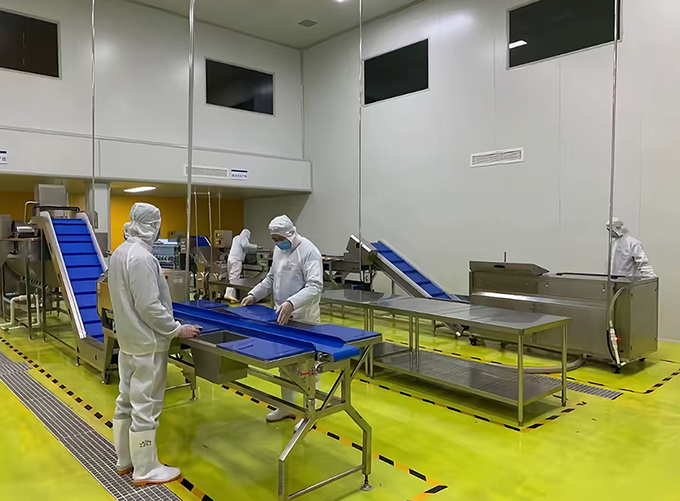
When multiple conveyors are used in combination, how can seamless integration be ensured?
Four Key Technical Measures for Ensuring Seamless Integration
1. Seamless Mechanical Interface Design
Mechanical interfaces form the foundation of integration, requiring the physical elimination of obstructions.
2. PLC-Based Synchronisation Control System
Electrical control serves as the brain for multi-machine coordination, necessitating precise matching of speed and start/stop operations.
3. Precise Material Detection and Positioning
Precise execution of transitions relies on sensors providing real-time perception of material status.
4. Buffering and Fault-Tolerance Mechanisms
Addressing transient fluctuations is crucial for maintaining overall fluidity.
Anti-Jamming Design: Drive rollers at transition points should employ grooved or rubber-wrapped surfaces to enhance friction and prevent material slippage. Concurrently, ensure mechanical tolerances remain within reasonable limits to prevent jamming at connection points due to thermal expansion and contraction.